

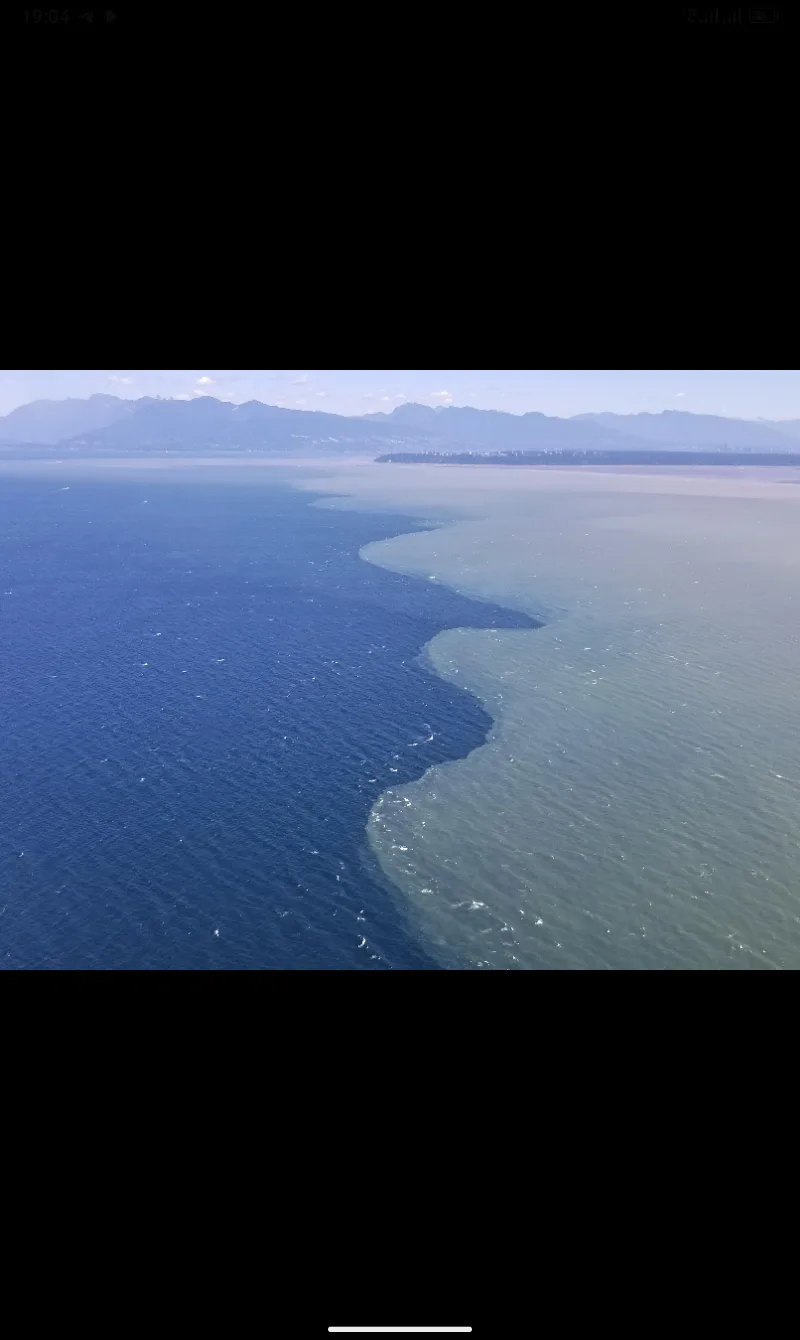
This can happen where water masses meet because they have different temperatures, salinity levels, sediment, or plankton. These differences can create visible boundaries, although the waters do mix over time.
The Gulf of Alaska is often mentioned in discussions of this phenomenon, but images can exaggerate the contrast, and it isn't a permanent wall separating two oceans.
The Gulf of Alaska is often mentioned in discussions of this phenomenon, but images can exaggerate the contrast, and it isn't a permanent wall separating two oceans.
15 views
3 likes
1 comments
Community Discussion
Nature's beauty often has fascinating science behind it! 🌊💙